A Baby Cherry® & Decor & More® — two consumer brands built on Amazon
My first products came in a kraft box — sourced from factories in China, Vietnam, and India, trademarked, listed, priced, reviewed, and returned. The full physical-product loop.
- Role
- Founder — sourcing, listings, pricing, growth, and the P&L.
- Timeline
- 2018 — 2023 (documented activity; latest confirmed sale Nov 2023).
- Status
- Wound down — the product-photography struggle became QuicSnap.
- Team
- 8 people.
- Tech
- Amazon FBA · private-label sourcing · PPC campaign design · listing A/B testing · inventory planning.
Before I ever touched an AI model, my products were silicone bibs and shower curtains. Two brands — A Baby Cherry® for baby essentials, Decor & More® for home decor — built as private labels and sold on Amazon. Everything a product needs to exist in the physical world, I did at least once: negotiated the factory, filed the trademark, wrote the listing copy, set the price, designed the packaging insert, and ate the returns.
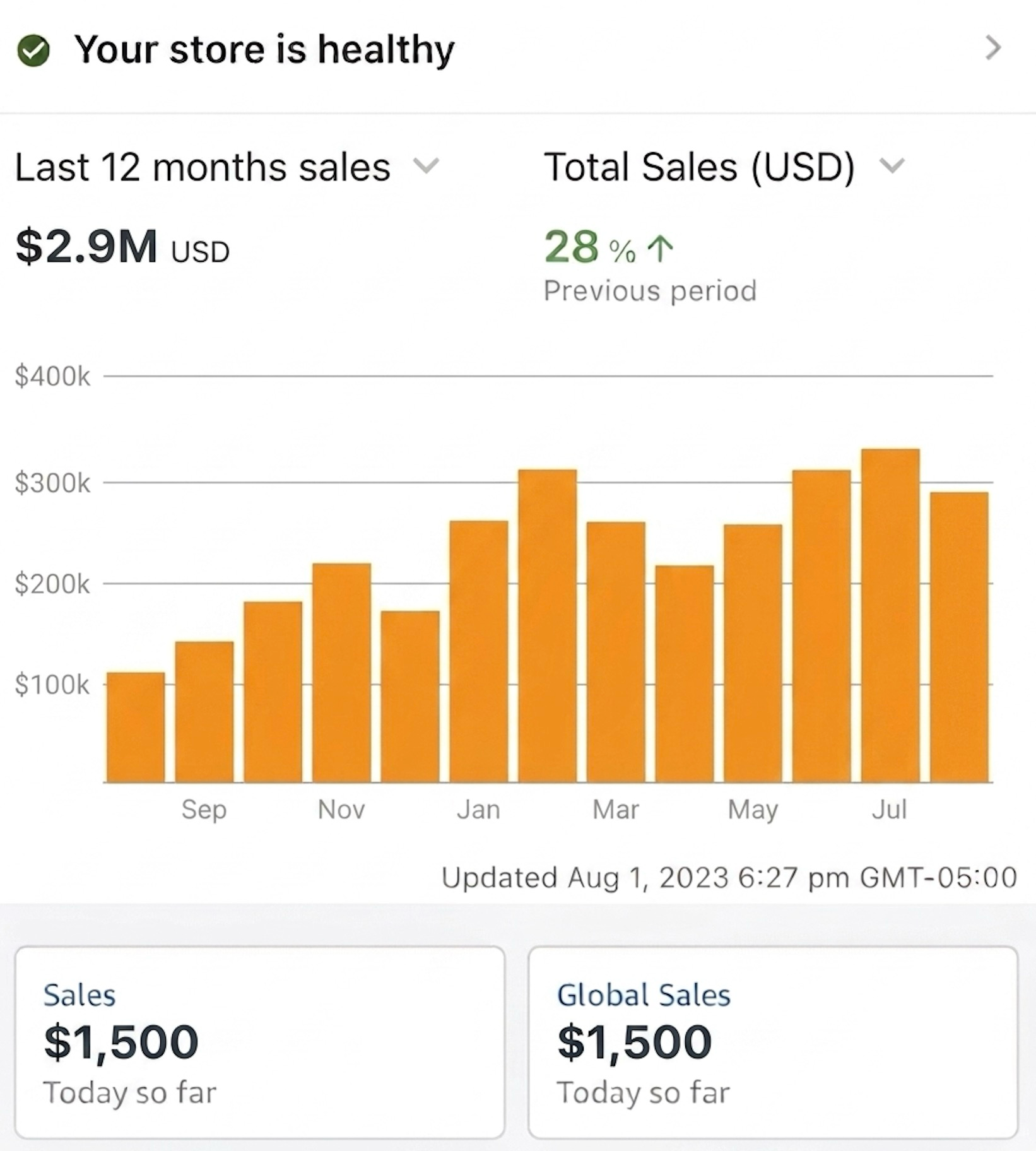
The starting point
This was where it all began. I had always been entrepreneurial, but FBA was the first model I saw that let a brand like mine scale rapidly — the warehousing, the logistics, and the customer trust already built, available to anyone willing to learn the craft. So I learned it. I studied the model, opened a seller account, and started selling.
What followed was an insightful journey over a couple of years. Along the way I learned:
- Product discovery — finding the products worth competing on
- Sourcing — and negotiating with the factories behind them
- Recognizing gaps the incumbents were leaving open
- How to differentiate from everyone else on the shelf
- Pricing strategies
- Managing my own inventory
- Designing and running ad campaigns
The biggest realization: the long-term moat is how differentiated you are from everyone else — and differentiation comes from empathizing with your users better than the next seller does.
The playbook
Our strategy was really simple:
- Pick a product in the niche.
- Read each and every customer review.
- Figure out what's missing.
- Talk to suppliers in China, India, and Vietnam — work out how to improve the product, get it made, and verify those pain points have actually been addressed.
- Once they have, launch it under our private label.
Then the cycle repeats: keep improving until the product holds at least 4.5 stars in reviews. In the end, most of our products sat at 4.3 stars or above — and at the peak, that loop had more than 72 SKUs live across the two brands.
The two brands
A Baby Cherry was the flagship: bibs, organic-cotton pillows, cloth books, playmats, bathtubs, swaddles — a full newborn-to-toddler line, trademark filed in 2019 and registered. It also had a mission baked into the brand: every purchase funded donated meals for a child in India through the Akshaya Patra Foundation, and that promise sat in the listing bullets, not in a CSR page nobody reads.
Decor & More® was the range experiment: shower curtains, ceramic ware, side tables, solar garden lights, artificial flowers, lamps — a broad home-and-garden assortment used to learn which categories rewarded a new brand and which punished it.
What the loop taught me
- The power of a brand. A trademark is paper; the brand is the accumulated trust — the reviews, the ratings, the repeat buyers. Once A Baby Cherry meant something to parents, every new SKU launched warmer than a generic listing ever could.
- Price is never the moat. Anyone can undercut you tomorrow. The durable edge is a product that is genuinely differentiated — built from what the reviews say is missing — and the user empathy to keep it that way.
- How the global supply chain works. Molds, MOQs, freight, customs, and lead times, negotiated directly with factories in China, Vietnam, and India — and learning which conversations lower your unit cost and which just delay your launch.
- Product pricing economics and PPC campaign design. Marketplace fees, margins, and ad spend are one system: price a product without modeling the campaign that has to sell it, and the P&L will correct you.
- A/B testing. Titles, images, price points, coupons — everything on a listing is testable, and the listing that wins is the one that got tested.
The struggle that became QuicSnap
I wouldn't call it a mistake — but the thing I genuinely struggled with was product photography. To launch a product successfully on marketplaces this competitive, you need very high-quality photography and videography from day one; that's what makes a listing stand out from the get-go. And back in 2021–2022, getting that meant paying photographers and videographers a crazy amount — for every SKU, every variant, every season.
Then Stable Diffusion launched, and it was an aha moment: all of this could be solved. AI could create images at scale, A/B test them to find the ones that convert, and give you great-quality infographics and images without spending tons of money. That lightbulb is why I pivoted to QuicSnap — and, eventually, why this whole portfolio exists.